






A Guide to Wagyu Beef Cuts: Characteristics & Best Uses
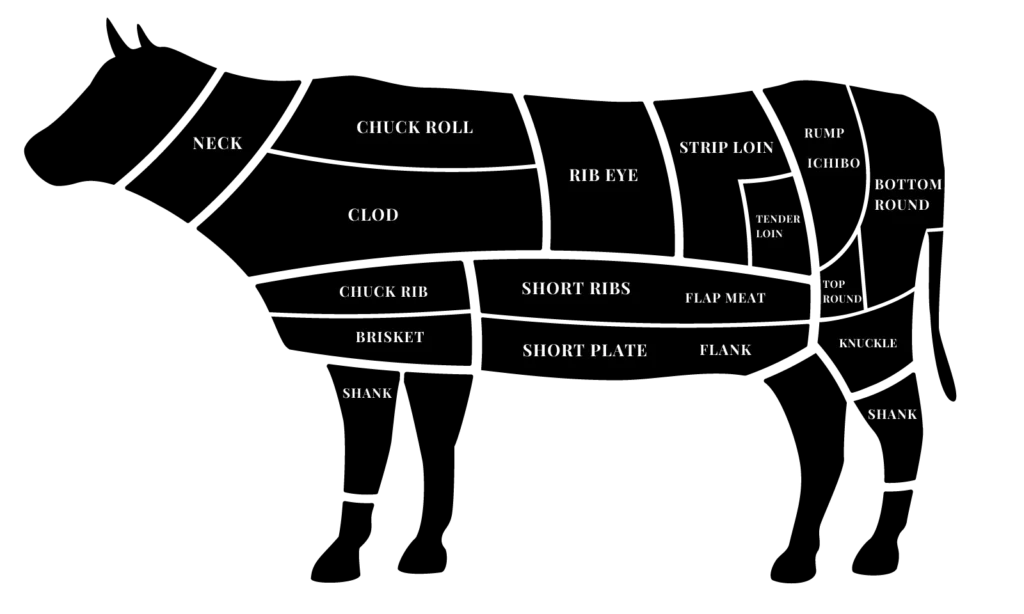
Wagyu beef is world-renowned for its intricate marbling (sashi), buttery texture, and rich “Wagyu aroma.” To help you make the most of this premium ingredient, here is a guide to the characteristics of 15 key cuts and the best ways to prepare them.
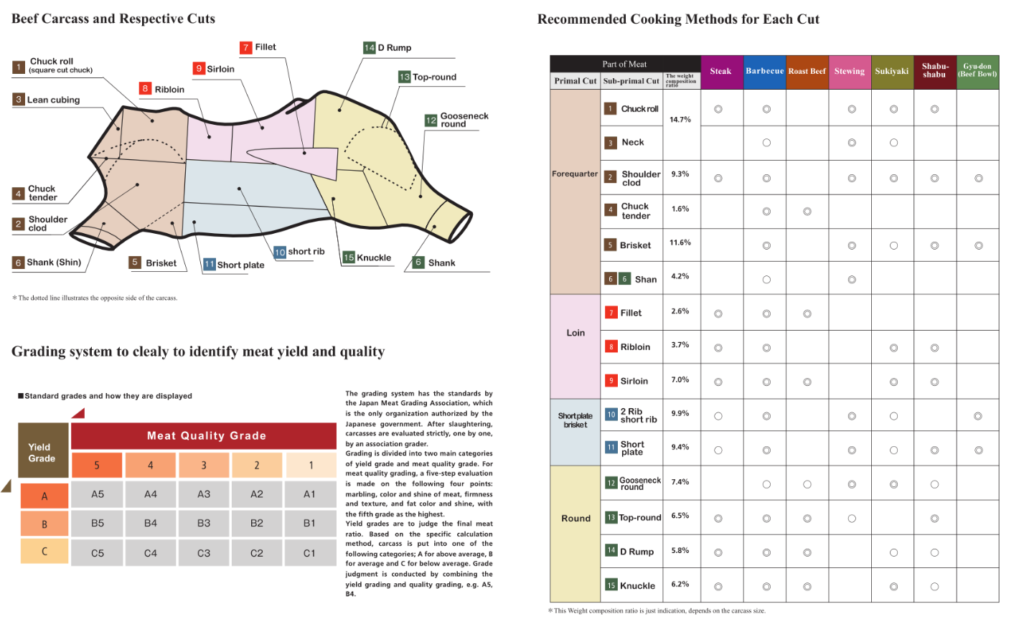
Source: Japan Livestock Products Export Promotion Association (Incorporated Association)
https://jlec-pr.jp/ebook/cutting/en/
1. TENDERLOIN (He-re / Fillet)
-
Characteristics: The most tender and premium cut, accounting for only about 3% of the cow. It is lean yet incredibly soft because the muscle is rarely exercised.
-
Best For: Steak, Chateaubriand, Beef Katsu (Cutlet).
2. STRIP LOIN (Sirloin)
-
Characteristics: Known as the “King of Steaks.” It features a fine balance of marbling and a rich outer layer of fat that provides intense sweetness and flavor.
-
Best For: Premium Steaks, Roast Beef, Luxury Sukiyaki.
3. RIB EYE (Ribu-rosu)
-
Characteristics: Located between the Chuck Roll and Strip Loin. It is famous for its high fat content and beautiful “frost-like” marbling. It offers a melt-in-your-mouth experience.
-
Best For: Ribeye Steaks, Shabu-shabu, Sukiyaki.
4. CHUCK ROLL (Kata-rosu)
-
Characteristics: One of the largest cuts from the shoulder to the back. It has a deep, savory flavor with moderate marbling and a satisfying texture.
-
Best For: Sukiyaki, Shabu-shabu, Yakiniku (Japanese BBQ).
5. CLOD (Ude / Shoulder)
-
Characteristics: A lean, flavorful muscle with a deep color. It is rich in gelatinous tissue and collagen, providing a complex “beefy” taste.
-
Best For: Braising, Stews, Curry, or Thinly Sliced BBQ (Mizuji/Top Blade).
6. NECK (Nekku)
-
Characteristics: A highly exercised, lean muscle. While the texture is tougher, it is packed with extractives and collagen that develop deep flavors when cooked slowly.
-
Best For: Beef Stew, Soup Stock, Ground Beef (Hamburger Steaks).
7. BRISKET (Mae-bara)
-
Characteristics: Located on the lower chest. It is characterized by thick fibers and significant fat layers. It becomes incredibly tender and juicy when slow-cooked.
-
Best For: Smoked Brisket, Slow-braised Dishes, Gyudon (Beef Bowls).
8. SHORT PLATE & FLANK (Tomo-bara / Plate)
-
Characteristics: The classic “Bara” (rib) cut. It consists of alternating layers of lean meat and fat. It is the go-to cut for those who love the sweet taste of Wagyu fat.
-
Best For: Yakiniku (Kalbi), Gyudon, Stir-fry.
9. SHORT RIBS & FLAP MEAT (Kainomi)
-
Characteristics: A rare part of the plate located near the tenderloin. It offers the rich flavor of ribs combined with the delicate tenderness of the fillet.
-
Best For: High-quality Yakiniku, Small Steaks.
10. TOP ROUND (Uchi-momo)
-
Characteristics: The leanest part of the hindquarter. It has a uniform texture and is very low in fat, making it a healthy choice for red meat lovers.
-
Best For: Roast Beef, Tataki (Searing), Lean Steaks.
11. BOTTOM ROUND (Soto-momo)
-
Characteristics: Slightly tougher than the top round due to muscle development. It has a coarser grain but offers a robust, hearty beef flavor.
-
Best For: Slow-cooking, Shigure-ni (Simmered Beef), Corned Beef.
12. RUMP & TOP SIRLOIN BUTT (Ranpu)
-
Characteristics: A versatile cut from the hip. It is very tender for a lean cut and lacks the “heaviness” of fattier parts, allowing the natural flavor of the meat to shine.
-
Best For: Steaks, Roast Beef, Yakiniku.
13. KNUCKLE (Shintama)
-
Characteristics: A round muscle from the thigh. It is lean and tender, containing prized sub-cuts like “Shin-shin.”
-
Best For: Lean Steaks, Roast Beef, Premium Red-Meat Yakiniku.
14. CHUCK RIB (Sankaku-bara / Triangle Flank)
-
Characteristics: Often considered the “King of Kalbi.” It is the most marbled part of the ribs and is incredibly rich and buttery.
-
Best For: Premium Yakiniku (Special Kalbi), Wagyu Nigiri Sushi.
15. SHANK (Sune)
-
Characteristics: The lower leg portion. It is very tough and full of tendons, but these transform into soft gelatin when simmered for a long time.
-
Best For: Beef Bourguignon, Pot-au-feu, Osso Buco.
