


Three Farms, Three Expressions of Japanese Wagyu
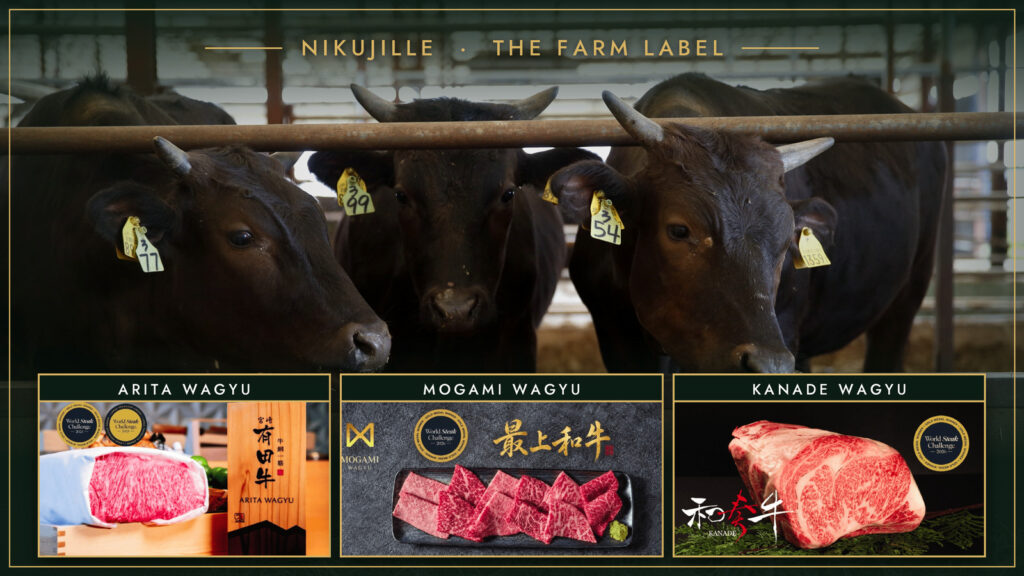
Japanese Wagyu is often discussed in terms of grade and marbling. But behind every cut are Japanese Wagyu producers whose choices shape the beef’s character, from the way cattle are raised and fed to the flavour and texture of the finished product.
At NIKUJILLE, we work with producers who share a commitment to quality while bringing their own identity to Japanese Wagyu. Among them are Arita Wagyu from Miyazaki, Mogami Wagyu from Yamagata and Kanade Wagyu from Kumamoto, each recognised with gold awards at the World Steak Challenge.
All three are raised without hormones, antibiotics or monensin. Beyond this shared standard, however, their approaches differ. Arita focuses on deep umami and balance, Mogami on savoury depth and clean-tasting fat, and Kanade on the gentle sweetness of its fat.
These differences reflect each farm’s philosophy, feeding practices, regional environment and scale of production.
Here’s how the three compare:
| Arita Wagyu | Mogami Wagyu | Kanade Wagyu | |
|---|---|---|---|
| Region | Miyazaki | Yamagata | Kumamoto |
| Farm | Arita Farm | Yamaguchi Chikusan | Hobo Farm |
| Herd size | Approx. 8,000 head | Approx. 3,000 head | Approx. 800 head |
| Japanese beef grade | A3–A5 | A4–A5 | A4–A5 |
| Flavour profile | Deep umami, refined fat | Savoury depth, clean finish | Gentle sweetness, including in the fat |
| Monthly supply capacity | On enquiry | On enquiry | On enquiry |
| Minimum order quantity | On enquiry | On enquiry | On enquiry |
| World Steak Challenge | 2025 Gold Medal, World No. 1 Large Producer | 2026 Gold Medal | 2026 Gold Medal |
Arita Wagyu: Deep Umami and Balance
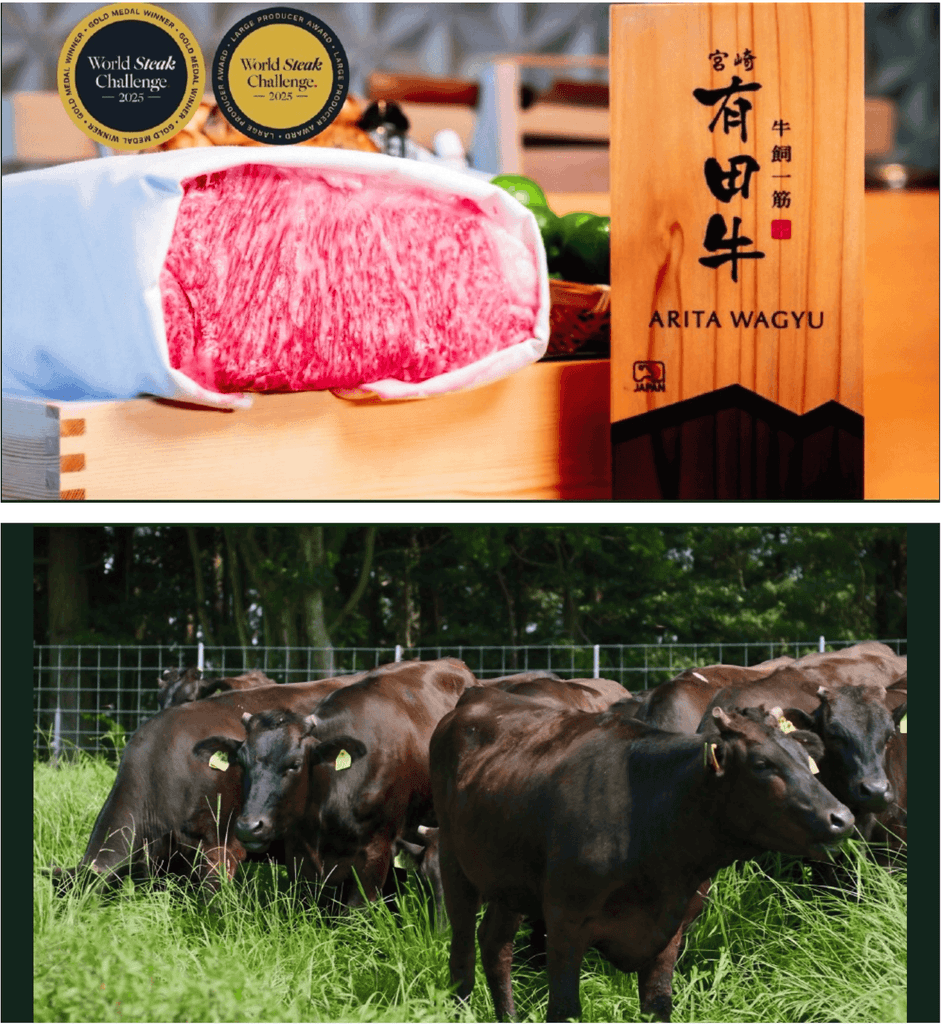
Located in Miyazaki Prefecture, Arita Farm raises approximately 8,000 Japanese Black cattle, drawing on more than 70 years of farming experience. Arita Wagyu has a distinctive Miyazaki identity and has received top honours at the National Wagyu Performance Competition for four consecutive tournaments.
Flavour: A Deep, Savoury Character
Arita Wagyu is defined by its deep umami and refined finish. The farm’s approach to raising cattle combines a carefully developed feeding programme with an environment designed around long-term consistency.
Calves spend approximately their first 14 months on pasture. Their feed includes ten grains, four in-house grasses and recycled mushroom substrate. The cattle also drink clean water sourced from deep underground.
Together, these practices contribute to Arita’s distinctive flavour profile: beef with a pronounced savoury character and fat that complements rather than overwhelms the meat.
Marbling: Quality Through Balance
For Arita Farm, the goal is not simply to achieve the highest possible grade. Instead, the farm prioritises the balance between lean meat and fat, with the aim of delivering an enjoyable eating experience across different levels of marbling.
Japanese beef grading provides an important reference for buyers, but Arita’s philosophy goes beyond the grade itself. The farm believes that the character of the beef, including its flavour and the way its fat eats, deserves equal consideration.
This approach is reflected in Arita Wagyu’s availability across A3 to A5, giving buyers options for different culinary applications and market preferences.
Production and Positioning
Arita Farm manages breeding, fattening, processing and sales through an integrated system. With a herd of approximately 8,000 cattle and a monthly supply capacity of around 100 head, it offers a scale suited to buyers seeking a consistent supply of Japanese Wagyu.
For importers, distributors and food-service operators, Arita combines production scale with a clear emphasis on flavour, consistency and balance.
Mogami Wagyu: Savoury Depth and Clean-Tasting Fat
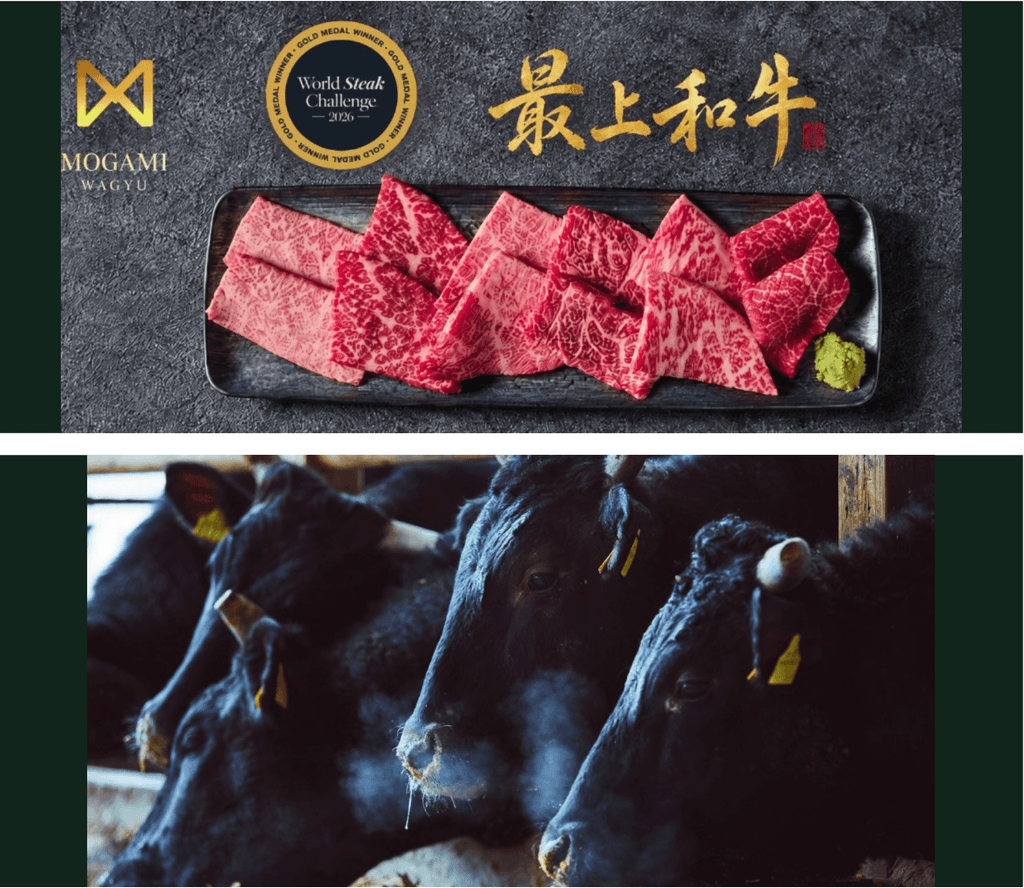
Mogami Wagyu is raised by Yamaguchi Chikusan in Mogami Town, in the north-eastern part of Yamagata Prefecture.
The farm is a family operation led by three brothers, who share responsibilities across sales, veterinary care and their own restaurant, Yakiniku CocoNemaru Ginza, dedicated to Mogami Wagyu.
With approximately 3,000 cattle, the family manages fattening, processing and sales in-house, maintaining close involvement throughout the production process.
Flavour: Richness Without Heaviness
Mogami Wagyu is known for its savoury depth and clean-tasting fat.
The farm tailors its feeding programme to five stages of growth, adjusting its approach as the cattle develop. The animals also drink groundwater from the Ou Mountains, connecting the farm’s production to the surrounding region.
The result is a flavour profile built around rich umami and a clean finish. Its marbling contributes richness, while the character of the fat helps keep the overall eating experience balanced.
The guiding idea is straightforward: marbled beef that delivers flavour and leaves you wanting another bite.
Marbling: Fine Texture and a Refined Finish
Graded A4 to A5, Mogami Wagyu combines fine marbling with exceptional tenderness.
Rather than focusing on marbling as a visual characteristic alone, the farm places importance on how the fat contributes to the finished dish. The aim is to deliver richness without allowing the fat to dominate the experience.
This makes Mogami an appealing option for chefs and buyers looking for highly marbled Wagyu with a clean, savoury character.
Production and Positioning
Mogami’s identity is closely connected to the family’s hands-on involvement, particularly its experience serving the beef at its own yakiniku restaurant.
Working directly with the product in a restaurant setting gives the family a practical understanding of how different cuts perform, from richly marbled selections to leaner portions.
Mogami offers a distinct proposition for buyers seeking a family-produced Wagyu with a clear regional identity and a focus on the eating experience.
Kanade Wagyu: The Gentle Sweetness of Fat
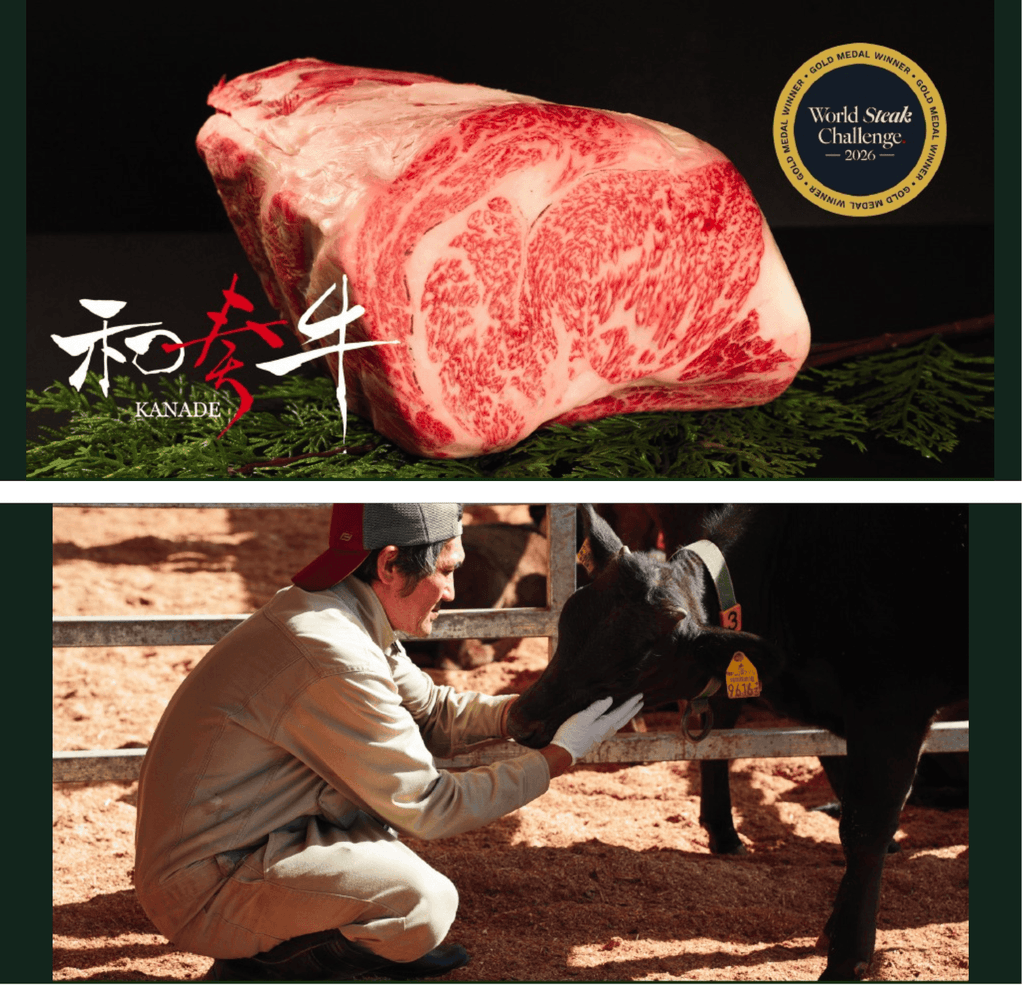
Kanade Wagyu is produced by Hobo Farm in Ozu Town, Kumamoto Prefecture, near Mount Aso.
With roots spanning generations, the farm is led by fifth-generation owner Toshiaki Saito and raises approximately 800 cattle. Its philosophy centres on deep devotion to both people and cattle, expressed through its approach to animal care, feeding and farm management.
Flavour: A Natural Sweetness
Kanade Wagyu is characterised by a gentle sweetness that extends into its fat.
The farm attributes this character in part to its feeding programme, which combines homemade feed made from high-sugar broken rice with forage grown on the farm. Natural spring water is another part of its approach.
The resulting flavour profile is elegant and rounded, with sweetness complementing the richness of the marbling.
For chefs and buyers, Kanade offers a different expression of Japanese Wagyu, where the character of the fat is central to the overall eating experience.
Marbling: Refined and Rich
The farm’s approach combines refined marbling with its commitment to raising cattle without monensin or hormonal agents. Rather than relying on marbling alone to define the product, Kanade’s identity centres on the relationship between the fat’s texture, its sweetness and the finished flavour.
This combination gives the brand a distinctive position for buyers seeking premium Japanese Wagyu with an elegant, sweet-tasting fat profile.
Production and Positioning
Animal care is an important part of Hobo Farm’s approach. The farm built an air-conditioned calf room maintained at 18–25°C for calves up to 1.5 months old. Since introducing the facility, the farm reports zero calf mortality as of December 2025.
Hobo Farm has also won the Kumamoto Prefectural Carcass Competition Grand Champion title three times.
Three Producers, Three Distinct Identities
Arita, Mogami and Kanade share a commitment to producing high-quality Japanese Wagyu, but each expresses that commitment differently.
For NIKUJILLE, these differences are what make each producer worth knowing. Our role is to connect the work, experience and identity of Japanese Wagyu producers with buyers who value what makes their products distinctive.
Whether you are an importer, distributor, chef or food-service operator, understanding the farm behind the beef is an important step towards finding the right Wagyu for your market.
Discover the farms behind our Wagyu.
Contact our team at sales@nikujille.com or here to learn more about Arita, Mogami and Kanade Wagyu, explore available cuts and discuss your requirements.
