





[The Depth of Wagyu] Why is it the World’s Best? The Secret of Japanese Farmers and the Ultimate Umami
- The Definitive Difference: Global “Wagyu” vs. “Authentic Japanese Wagyu”
- The Art of Raising Wagyu: A Farmer’s Passion
- The Science of Flavor: The Magic of “Wagyu Aroma”
- Beyond Famous Brands: A World of Diverse Local Wagyu
- Understanding Grading: Why it Matters
- Conclusion: Experiencing a Japanese Cultural Heritage
Today, “Wagyu” has become a global synonym for the ultimate culinary luxury. However, as its popularity grows worldwide, many people are unaware of the profound difference between “Wagyu” raised abroad and the authentic “Japanese Wagyu” produced in Japan.
In this article, we explore why Japanese Wagyu is considered the gold standard, focusing on the rigorous dedication of local farmers and the scientific secrets behind its unparalleled flavor.
The Definitive Difference: Global “Wagyu” vs. “Authentic Japanese Wagyu”
While “Wagyu” is now produced in countries like Australia and the USA, it is crucial to understand that Japanese Wagyu is in a league of its own.
Pureblood Lineage (Fullblood)
In Japan, Wagyu refers to four specific breeds (most notably Japanese Black) that have maintained a 100% pure bloodline through strict registration systems for generations. In contrast, much of the “Wagyu” produced overseas is “Crossbred”—Wagyu genetics mixed with local breeds like Angus. The intensity of the marbling and the aroma is only fully realized in the purebred Japanese lineage.
The Philosophy of “Time and Care”
- Overseas Wagyu: Often focuses on efficiency, utilizing vast pastures and shorter feeding periods.
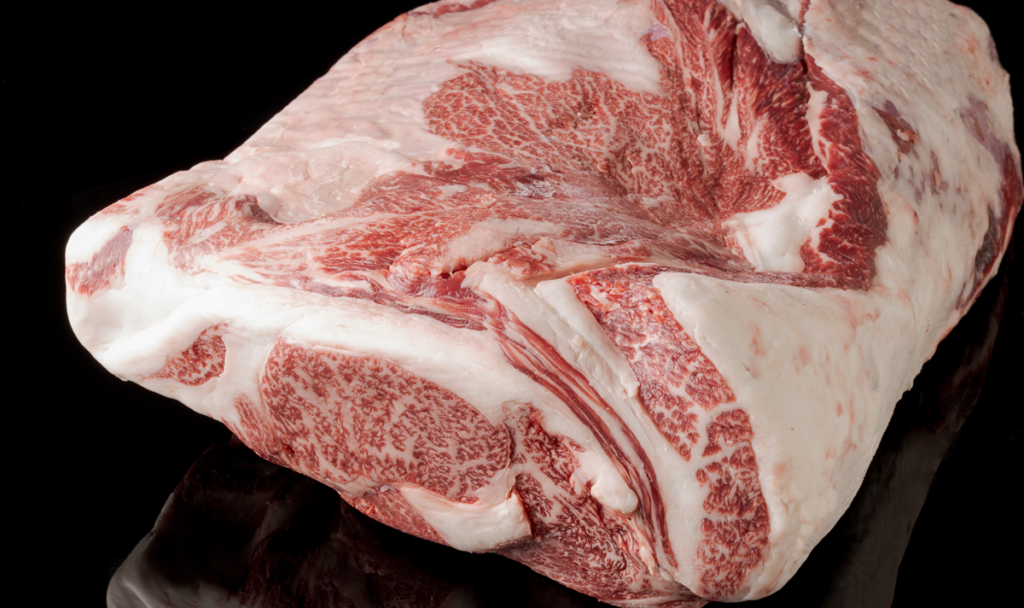
- Japanese Wagyu: Farmers raise cattle as if they were family members. They are fed for up to 30 months or longer—significantly longer than standard beef. This slow maturation is what allows the fat to integrate so finely into the muscle, creating the legendary “melt-in-your-mouth” texture.
The Art of Raising Wagyu: A Farmer’s Passion
The quality of Japanese Wagyu is sustained by “Takumi” (craftsmanship). Unlike mass-production models, Japanese farming is an intimate, small-scale process.
- Individual Attention: Farmers observe each cow daily, adjusting feed based on its appetite and health. A stress-free environment is essential for developing high-quality marbling.
- Custom Feed Programs: Using a blend of high-quality grain, rice straw, and sometimes local specialties (like sake lees or fruit), farmers craft a unique flavor profile that reflects their specific region.
The Science of Flavor: The Magic of “Wagyu Aroma”
What makes Japanese Wagyu truly addictive is not just the fat—it’s the chemistry.
- Low Melting Point: Japanese Wagyu fat is high in oleic acid. The melting point is so low that the fat literally dissolves at human body temperature, releasing an immediate burst of flavor.
- Wagyu-ko (Wagyu Aroma): When heated, authentic Japanese Wagyu emits a unique fragrance similar to peaches or coconut. This “Wagyu Aroma” is a hallmark of the purebred Japanese cattle and is absent in most other beef.
Beyond Famous Brands: A World of Diverse Local Wagyu
While names like “Kobe Beef” are world-famous, Japan is home to over 200 to 300 unique Wagyu brands across the country.
A Map of Diversity
From the snowy mountains of the north to the tropical islands of the south, every region in Japan produces its own brand of Wagyu.
- Local Identity: Modern Wagyu culture is shifting. Instead of just “famous names,” connoisseurs are now seeking out specific farmers who use unique methods or local feed to create distinct tastes.
- The Rise of Red Meat: While marbling (Sashi) remains iconic, many local brands are now being praised for the deep, savory “Umami” of their lean red meat, offering a healthier yet flavorful experience.
Understanding Grading: Why it Matters
The famous “A5” rank is the highest grade awarded by the Japan Meat Grading Association.
- The “A” refers to the yield (how much high-quality meat is obtained).
- The “5” refers to the quality, including marbling, color, and texture.
However, the best Wagyu isn’t always just about the highest rank—it’s about finding the specific brand and cut that matches your personal preference and the dish you are preparing.
Conclusion: Experiencing a Japanese Cultural Heritage
Authentic Japanese Wagyu is more than just food; it is a “Culinary Art” born from the climate of Japan and the tireless efforts of its farmers.
We encourage you to look beyond the famous labels and explore the diverse world of local Japanese Wagyu. Each bite tells a story of a specific farm, a specific region, and a dedication to perfection that you won’t find anywhere else in the world.
